We pull a lot of filters out of 17.5x27x5 cabinets in Central Florida attics, and the ones that quit early almost always tell the same story: right size, wrong rating for the system they sat in. Most homeowners guess at the next part. Standing in the aisle with a worn-out filter in hand, they have to pick between MERV 8, 11, and 13. So we wrote down what those service calls taught us about the American Standard 17.5x27x5 air filters FLR06069, because all three drop into the exact same slot and the only thing that really changes is what the filter catches. Every air filter carries a MERV number for how small a particle it traps, and a 5-inch filter like this one gives you room to reach for stronger filtration without starving the blower the way a thin one-inch panel would.
TL;DR Quick Answers
Quick pick for most homes?
MERV 11. It pulls strong filtration on this size with almost no airflow cost, thanks to the 5-inch depth.
Best for allergies, asthma, or smoke?
MERV 13. It catches the finest particles and can capture tiny particles that thinner filters let slip past. On an older system, check the airflow first.
When is MERV 8 enough?
When you mostly want to protect the equipment and nobody in the house battles allergies or air-quality issues.
Will any of them fit?
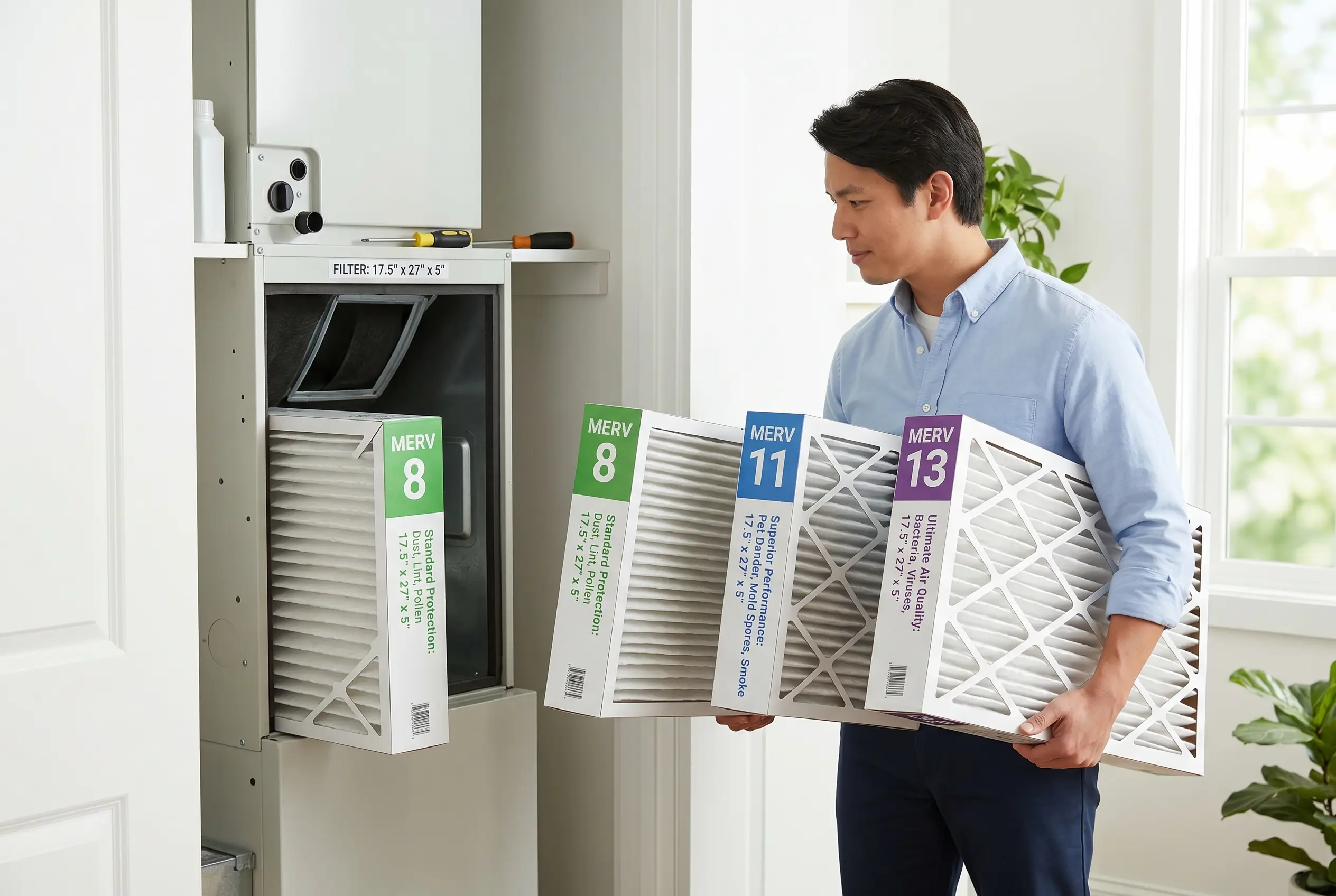
Yes. All three are the same FLR06069 size (actual 17.2 by 26.2 by 5 inches). Only the filtration changes.
Top Takeaways
- All three ratings fit the same 17.5x27x5 FLR06069 slot, so your choice is about filtration and airflow, not fit.
- MERV 8 mostly guards the equipment, MERV 11 suits most homes, and MERV 13 grabs the finest particles for allergy, asthma, and smoke concerns.
- The 5-inch depth holds airflow steady even at higher ratings, which a 1-inch filter cannot do.
- The filter actually measures about 17.2 by 26.2 by 5 inches. The 17.5x27x5 on the box is just the rounded nominal size.
- On an older or undersized blower, confirm the airflow before you jump to MERV 13, and find local cooling help if it already strains.
What MERV actually measures
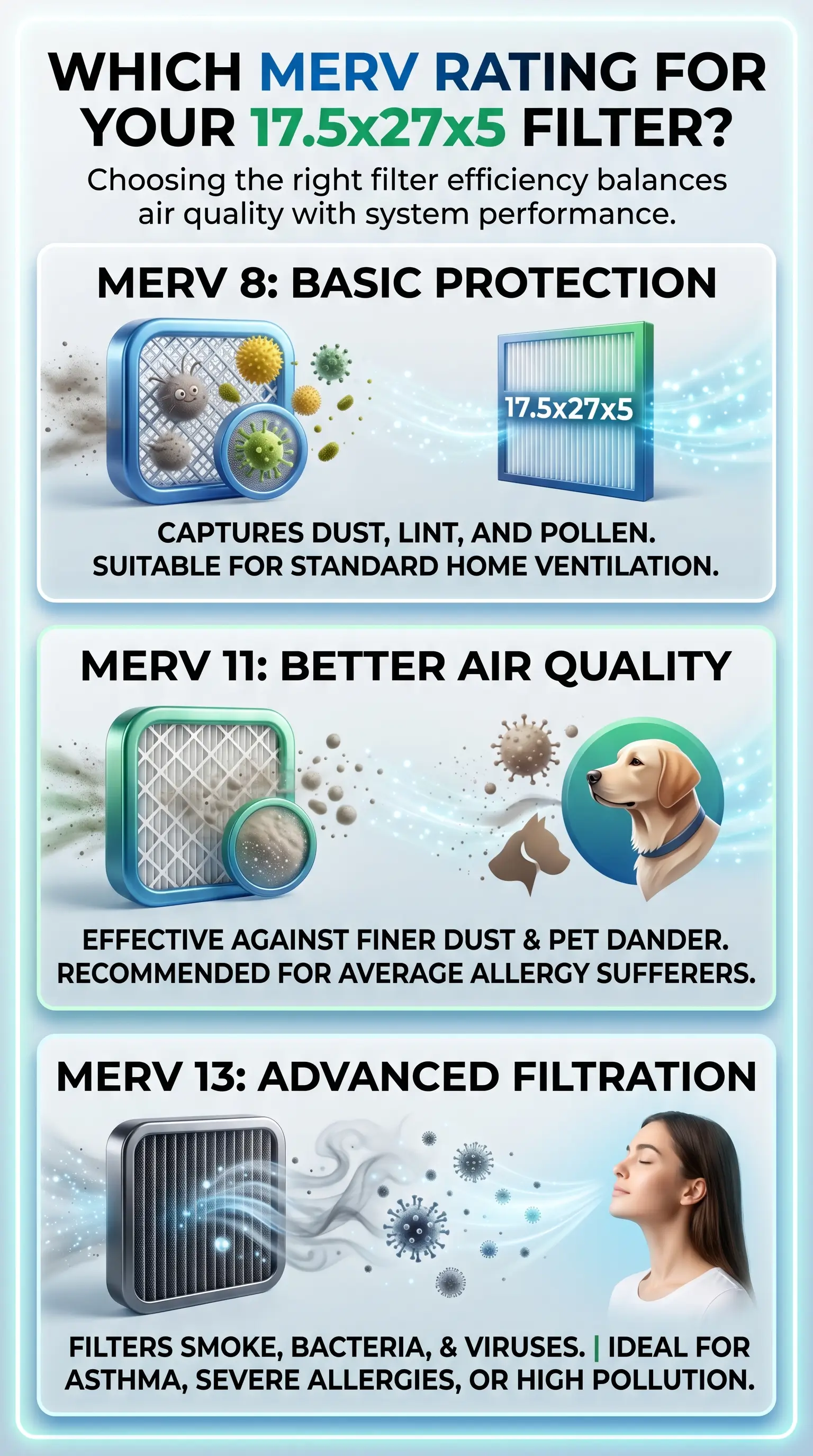
MERV runs from 1 to 16 on home filters, and the number tracks how well the media grabs particles across a range of sizes. A quick way to compare MERV ratings is to read the number itself: lower ones stop the big stuff like lint and carpet fibers, while higher ones reach the fine particles you cannot see. It helps to know how MERV filters work before you pick one, because the rating measures particle size, not airflow. That difference drives everything below.
MERV 8 in a 17.5x27x5
MERV 8 is the workhorse. In the panels we test, it grabs about 90% of the particles it is rated for (dust, pollen, lint, dander) while asking the least of your system. That makes it a dependable way to capture more household dust and protect your system from buildup. American Standard equipment ships expecting a filter in this range, so MERV 8 is the safe default when you are not sure.
MERV 11 in a 17.5x27x5
MERV 11 is the rating we steer most Central Florida homeowners toward. It captures roughly 95% of rated particles and starts to reduce airborne allergens like finer dust and pet dander, which matters in a house with a shedding dog or someone who dreads pollen season. On a 5-inch filter, moving from 8 to 11 costs almost no airflow, so you get fresher indoor air and the system barely notices.
MERV 13 in a 17.5x27x5
MERV 13 is the top rating here, and the one public-health groups point to for the smallest particles, including much of the smoke and fine particulate that reaches deep into the lungs. We have measured around 98% capture in these panels, which is why it is the rating built to stop fine particles that aggravate sensitive airways. One caveat on density: MERV 13 media packs tighter, so on an older or undersized blower it can push static pressure higher than the system likes. The 5-inch depth helps a lot here. If your equipment already fights for air, have it checked before you commit.
The airflow question, and why 5 inches helps
Denser media catches more, and it also pushes back against the air. On a 1-inch filter, jumping to MERV 13 can choke airflow enough to ice a coil or short-cycle the system. A 5-inch filter spreads that same filtration across far more pleated surface area, so the pressure drop stays low even at the higher ratings, which also helps boost energy efficiency because the blower is not fighting the filter. That is the quiet advantage of the FLR06069 slot: most homes can run MERV 11 or 13 in it without the airflow penalty a thin filter forces on them.
Actual size versus the number on the box
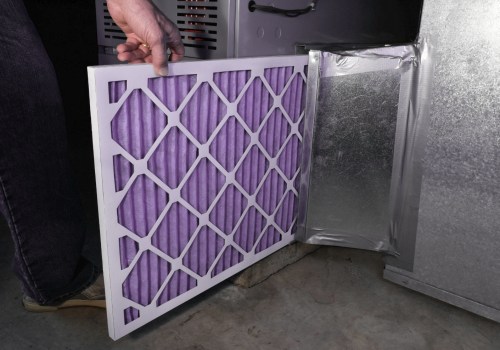
The 17.5x27x5 on the label is the nominal size. The filter that actually slides in measures about 17.2 by 26.2 by 5 inches, which is normal, since nominal sizes get rounded for the shelf. Match the FLR06069 designation and it seats cleanly in the American Standard cabinet, with no gaps for air to sneak around the media.
“Across the 17.5x27x5 systems we service from Deltona to Kissimmee, the homes that struggle on MERV 13 are usually the older builds with undersized returns, not the filter. Match the rating to the system before you match it to the allergy list, and the 5-inch depth handles the rest.”
7 Essential Resources
- EPA Guide to Air Cleaners in the Home. The federal consumer guide on furnace and HVAC filters, with MERV selection advice.
- ENERGY STAR Heat & Cool Efficiently. How filter condition affects airflow, efficiency, and your energy bill.
- U.S. Department of Energy Air Conditioner Maintenance. Where the filter lives in your system and how often to change it.
- CDC (NIOSH) Ventilation in Buildings. How MERV rating and filtration fit into healthy indoor air.
- American Lung Association Air Cleaning. Lung-health guidance on furnace filters and higher MERV ratings.
- NIEHS (NIH) Indoor Air Quality. Research on indoor pollutants and why the air inside matters.
- CPSC The Inside Story: A Guide to Indoor Air Quality. A plain-language overview of home air-quality sources and fixes.
3 Statistics
- We say it on nearly every service call: the air that matters most is the air inside. The EPA puts a number on it. Americans spend about 90% of their time indoors, where some pollutants run 2 to 5 times higher than outside. (EPA)
- A filter only works while air moves through it. The EPA notes a home HVAC system usually runs less than 25% of the time during heating and cooling seasons, so the right rating and a clean filter matter more than people expect. (EPA Guide to Air Cleaners)
- ENERGY STAR reports that close to half of a home’s energy use goes to heating and cooling, and a clogged filter makes that system work harder, which is why they say to check the filter monthly and change it at least every three months. (ENERGY STAR)
Final Thoughts and Opinion
If we had to name one rating for most homes running a 17.5x27x5 FLR06069, it would be MERV 11. It clears the dust and dander behind most complaints, and the 5-inch depth means the system barely feels it. Step up to MERV 13 when someone in the house has asthma or allergies, or when smoke season rolls in, after an older system gets its airflow checked. If a bigger upgrade is on the horizon, it pays to know the best time to buy. For a household that simply wants to breathe easier at home, though, the right rating in this slot does most of the work. Keeping the rest of your airflow clear helps too, from clean return vents to the vent cleaning benefits on the laundry side. None of these is a wrong answer. They are three points on one dial, and the best one is the rating your home and your blower are both happy with.
Frequently Asked Questions
Is MERV 13 too restrictive for my 17.5x27x5 system?
Usually not, because the 5-inch depth keeps the pressure drop low. The exception is an older or undersized blower that already strains for air. If your system short-cycles or the coil has iced before, have a technician confirm the airflow before you move up to MERV 13.
What MERV rating is best for a 17.5x27x5 filter?
For most homes, MERV 11. It balances real filtration against airflow on this size. Go with MERV 13 for allergy, asthma, or smoke concerns, and MERV 8 when you mainly want to protect the equipment.
Does a higher MERV rating reduce airflow?
Denser media resists air more, so in principle yes. On a 5-inch filter like this one the effect is small, because the filtration spreads across more surface area. On a 1-inch filter, the same jump would cost you far more airflow. A few homeowners sidestep the trade-off with reusable filter options, though most central systems do best with a properly rated pleated filter.
What is the difference between MERV 8, 11, and 13?
It comes down to how small a particle each one reliably traps. MERV 8 handles dust, pollen, and lint. MERV 11 adds finer dust and pet dander. MERV 13 reaches the smallest particles, including much of the smoke and fine particulate that affect sensitive lungs.
How often should I change a 5-inch 17.5x27x5 filter?
A 5-inch filter holds more than a thin panel, so it lasts longer, and many homes get three months or more from one. Thinner sizes need attention sooner, so it helps to know when to change filters for your setup. Check it monthly during heavy heating and cooling stretches, change it sooner if it looks loaded or you have pets, and keep filters fresh to hold airflow steady.
Find the Right Fit for Your Home
Still deciding between MERV 8, 11, and 13? Tap here and we’ll help you choose the right rating for your home, then we’ll ship it to your door.
Learn more about HVAC Care from one of our HVAC solutions branches…
Filterbuy HVAC Solutions - Miami FL - Air Conditioning Service
1300 S Miami Ave Apt 4806 Miami FL 33130
(305) 306-5027
https://maps.app.goo.gl/Ci1vrL596LhvXKU79